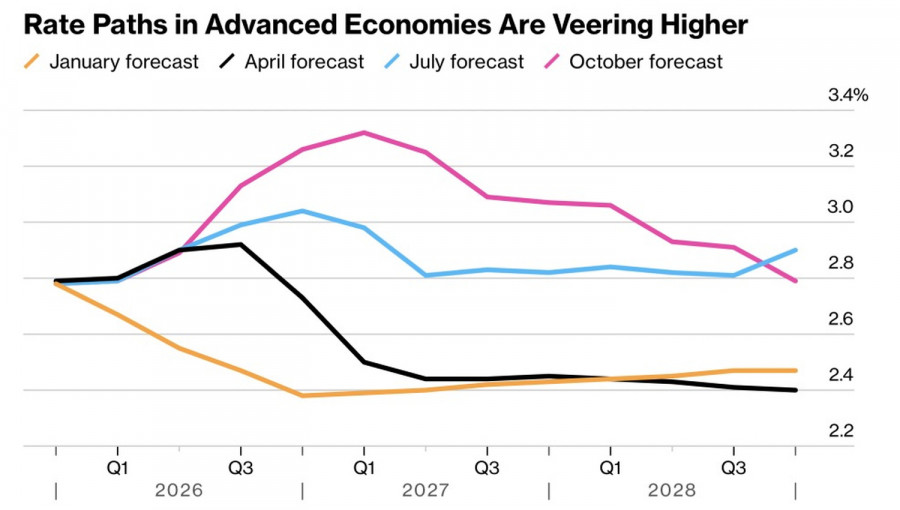
Can bond markets take on all the heavy lifting of central banks? Swaps price a globally coordinated cycle of rate increases over the next year, and long-term bond yields in the US, Europe and Japan remain near multi-year highs.
Yields have risen so much that Federal Reserve chair Kevin Warsh conceded the federal funds rate may not need to be raised as aggressively as previously expected, and the Bank of England and the European Central Bank have made similar hints. Since expensive borrowing acts like a handbrake, it will slow the economy and inflation on its own.
That sounds reasonable, but market rates don't replace tight monetary policy, and central banks risk their credibility if they use high bond yields as a reason to do nothing.
The USD index completed a fourth consecutive week of gains, adding about 3% over that period — the best performance since early 2025. Treasury yields have pushed toward recent peaks, and speculative traders, according to CFTC data, hold over $35 billion of bullish dollar positions.
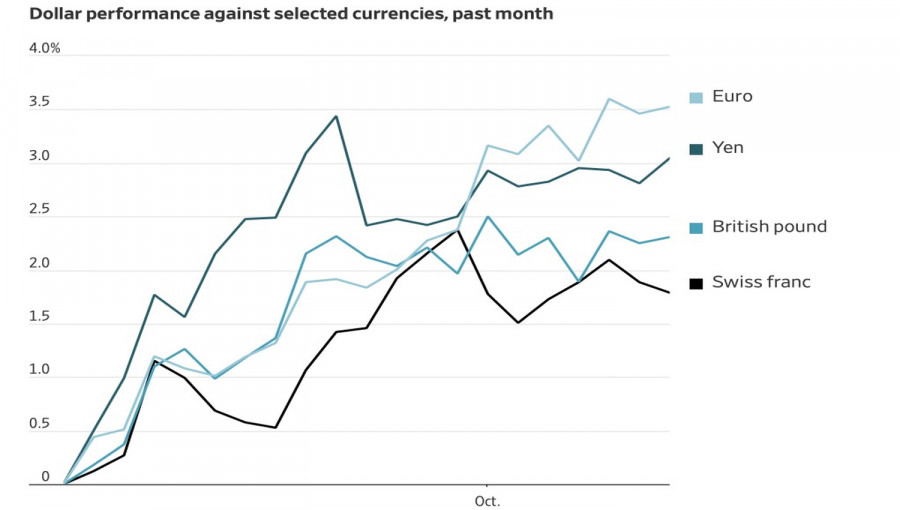
Expensive oil amid the Middle East conflict and expectations of a December Fed hike support the dollar. The US ability to keep rates higher than other economies also helps the dollar—a weighty argument for a bullish view on the greenback.
Traders will get a new signal from September's consumer-price data. A result above expectations will give a reason to buy the dollar on a hawkish Fed pivot, while weak figures would cool the rally.
Deutsche Bank believes the main systemic risk for markets next year is not France but an unforeseen failure in the artificial-intelligence ecosystem. They cite a Brookings estimate that companies must earn over $3.5 trillion a year by 2032 to justify investments in data centers, and they see concentration risk as the dollar's biggest blind spot.
Goldman Sachs names three supports for the dollar rally: the rate gap, the superiority of US equities and technology, and Brent above $100. The bank believes only energy and AI remain truly structural themes, and EUR/USD may have fallen more than fundamentals justify. They also do not rule out risks to the dollar: a large budget deficit and policy uncertainty could change the picture.
If markets really do the central banks' job, who pays the price if the bet proves wrong?
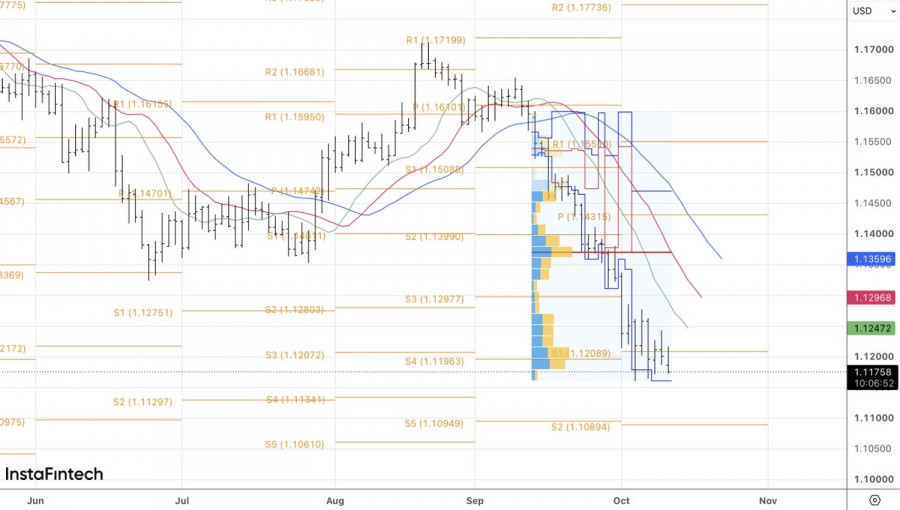
Technically, on the daily chart, EUR/USD formed a pin bar that allowed short positions to be added. A move below 1.1165 would give grounds to talk of a downtrend resuming and provide a fresh reason to sell toward previously stated targets at 1.1000 and 1.0870.
HIZLI BAĞLANTILAR
ForexMart is authorized and regulated in various jurisdictions.
(Reg No.23071, IBC 2015) with a registered office at First Floor, SVG Teachers Co-operative Credit Union Limited Uptown Building, Corner of James and Middle Street, Kingstown, Saint Vincent and the Grenadines
Restricted Regions: the United States of America, North Korea, Sudan, Syria and some other regions.
show error
Unable to load the requested language file: language/turkish/cookies_lang.php
date: 2026-10-13 07:48:56 IP: 172.18.0.1

















 Bize Ulaşın